Material path 01 / Flat material
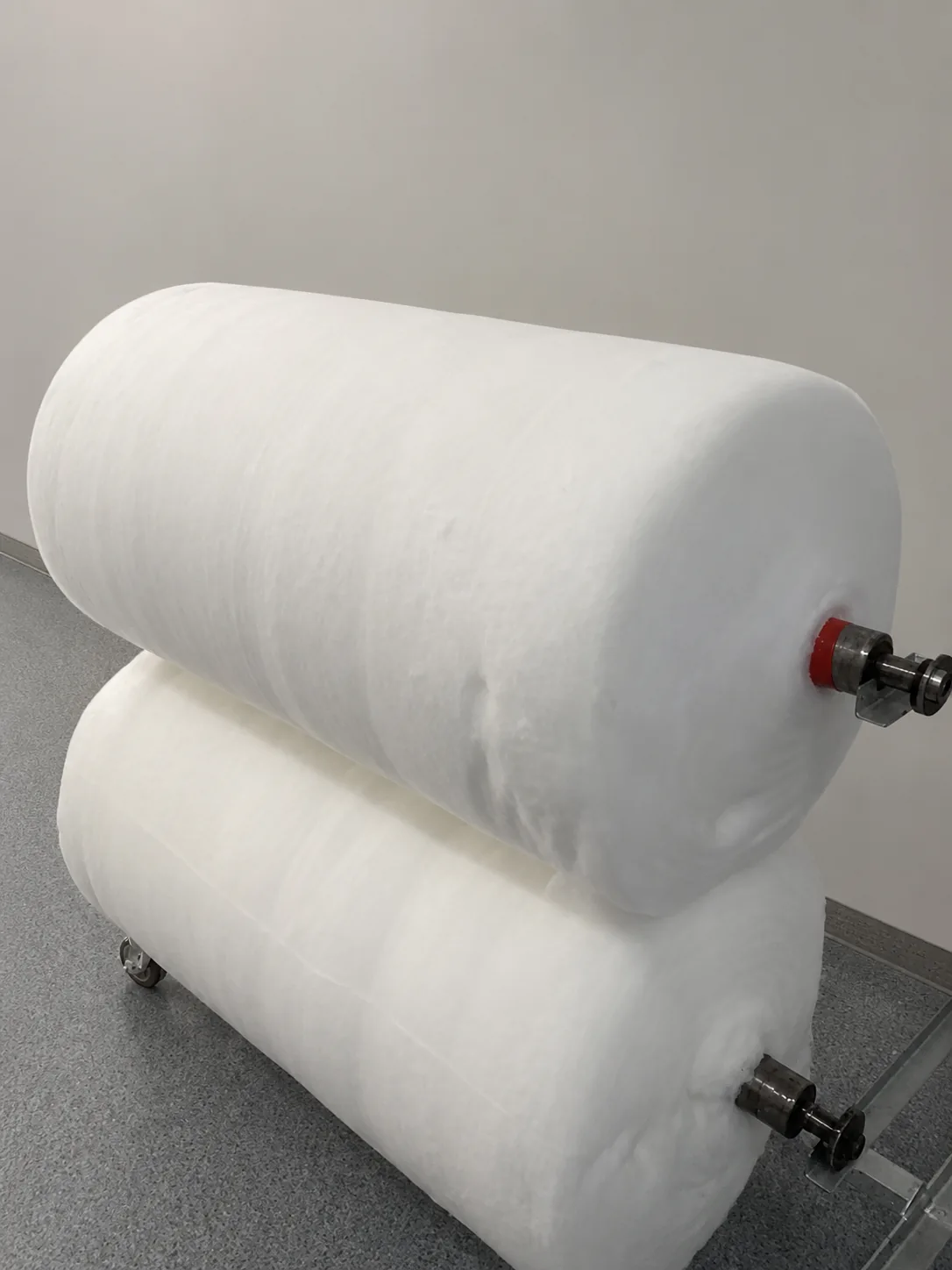
Carded Cotton Sheet
A flat, even cotton layer prepared as the material input for further converting.
Rolling / Cutting / Folding01 Global sourcing
Global raw cotton sourcing
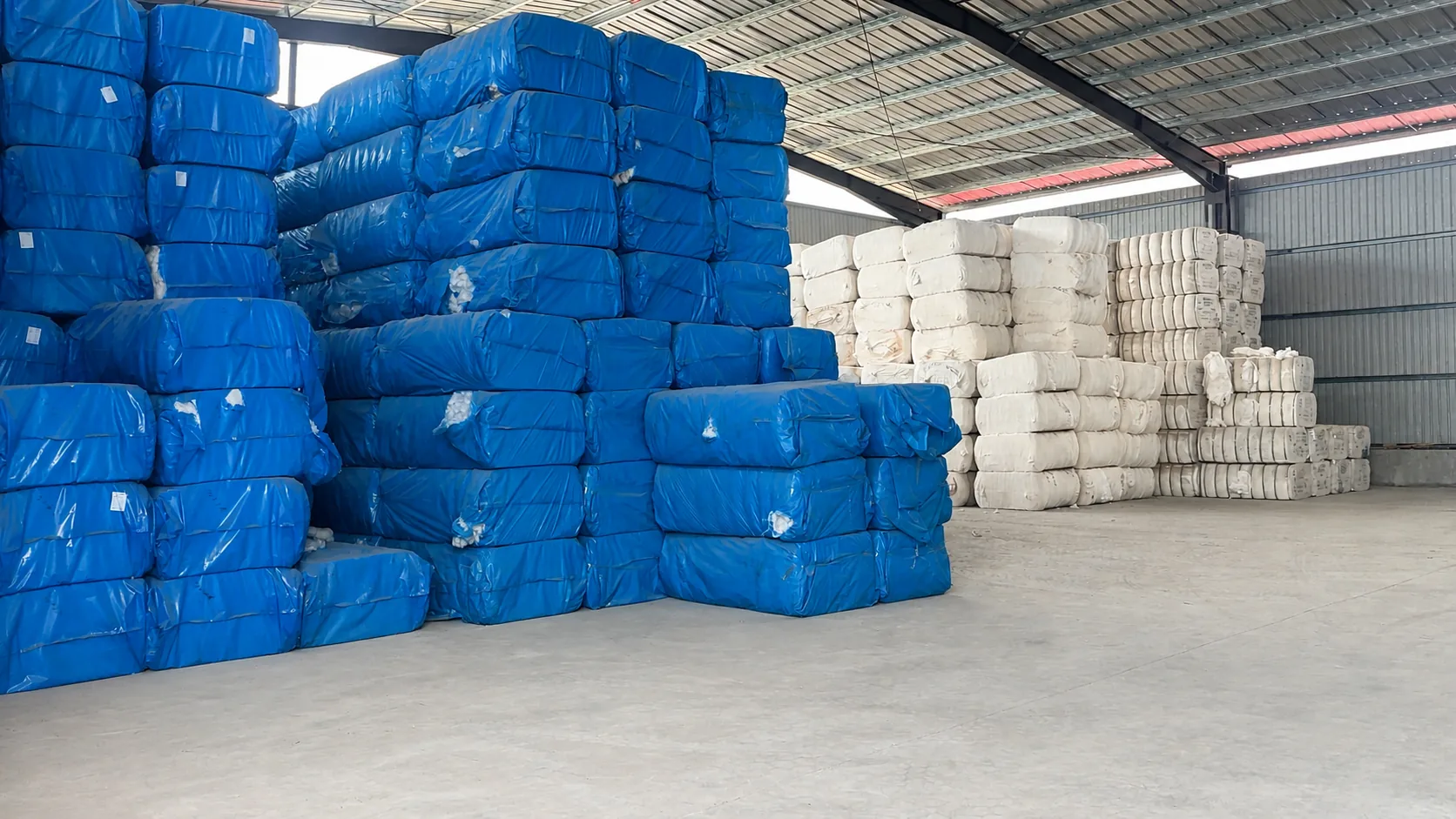
WJ Cotton sources cotton lint and cotton linters from suppliers around the world. Before making a sourcing decision, we review the quality information provided for the material offered. When closer verification is necessary, our team may travel to the supplier's country to inspect the cotton on site.
02 Scouring & bleaching
Prepared absorbent fiber
Compressed raw cotton arrives in bales before being opened and cleaned of naturally occurring impurities such as seed and leaf fragments. The prepared fiber is then loaded into large process vessels, where it is scoured at high temperature with sodium hydroxide and water to remove natural waxes and oils, followed by high-temperature hydrogen peroxide bleaching.
Our bleaching process does not use chlorine-containing bleaching chemicals or fluorescent whitening agents. Under the process conditions, hydrogen peroxide ultimately breaks down into water and oxygen. The cotton is then washed, dewatered, dried with a heat-pump system, reopened and compressed into wrapped bales for storage and shipment.
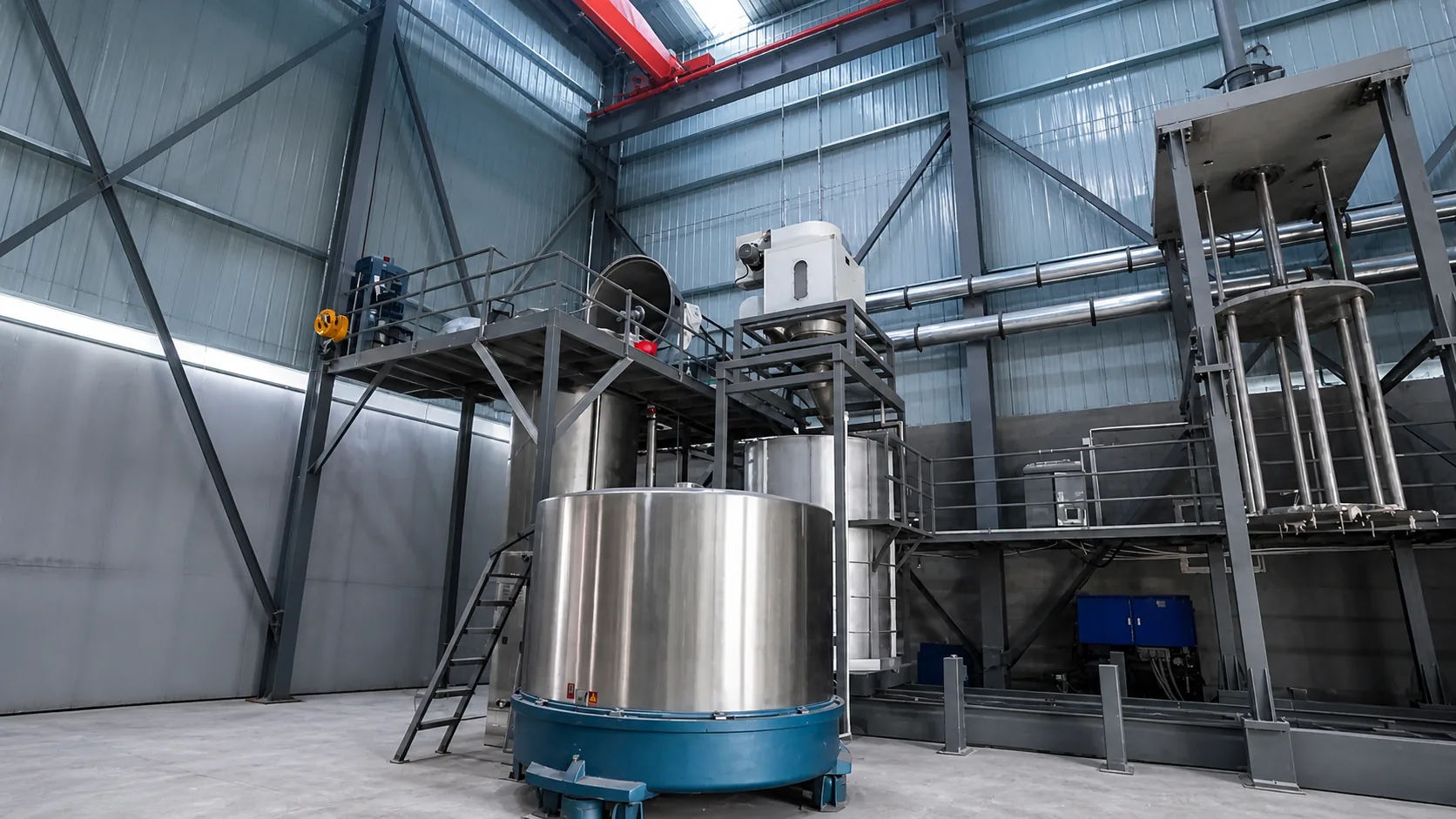
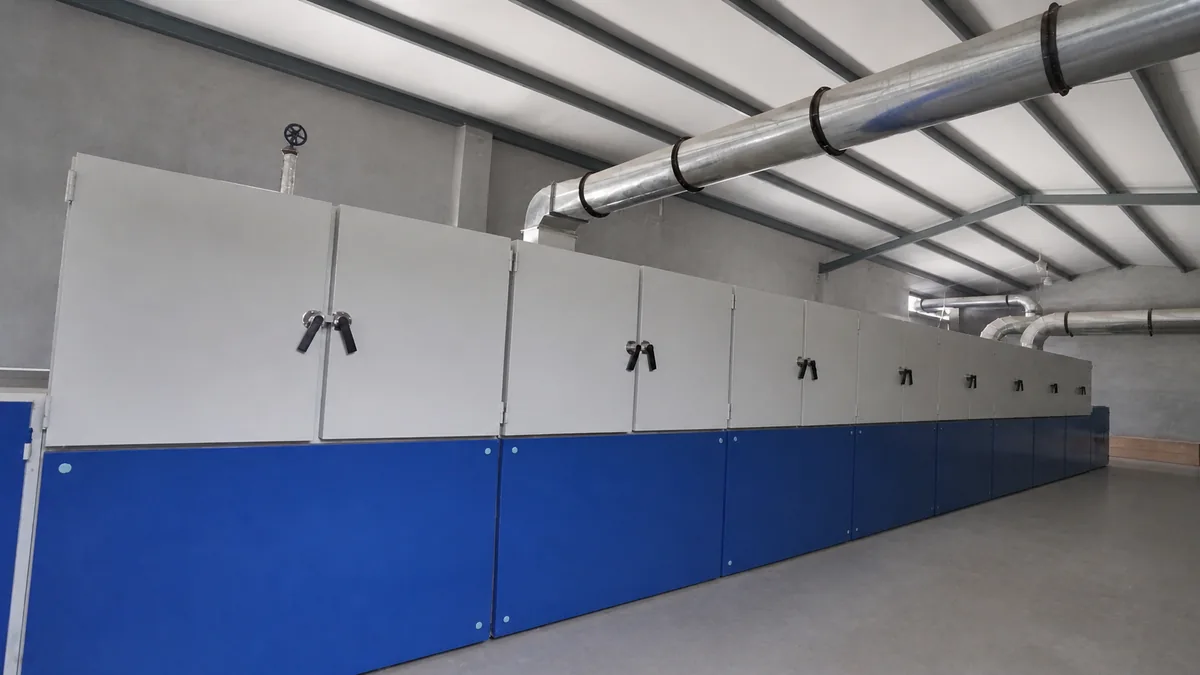
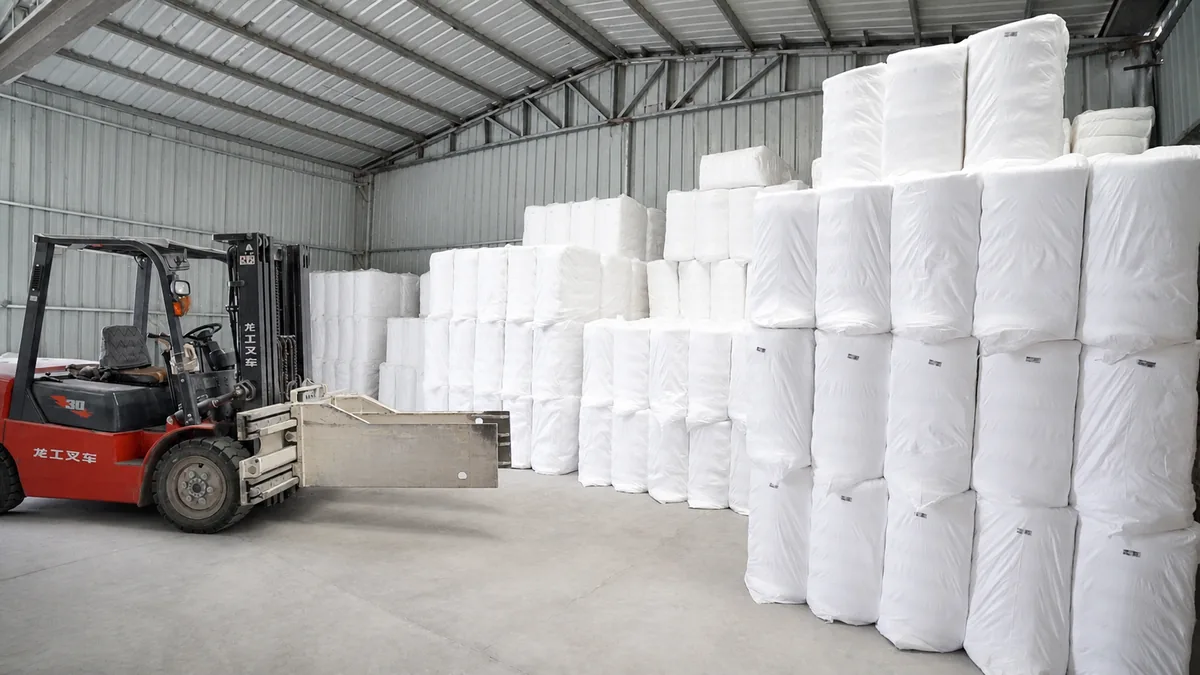
Production sequence
Imported raw cotton arrives in compressed bales.
Compressed cotton is fed into the preparation line.
Loosen the fiber and remove natural impurities.
High-temperature scouring followed by hydrogen peroxide bleaching.
Rinse, dewater, heat-pump dry and reopen the cotton.
Compress and wrap the finished bleached cotton into bales.
03 Carding & forming
Two material paths
After bleaching, drying and reopening, absorbent cotton passes through carding to form either cotton sliver or a carded cotton sheet. The selected material form depends on the finished product to be manufactured next.
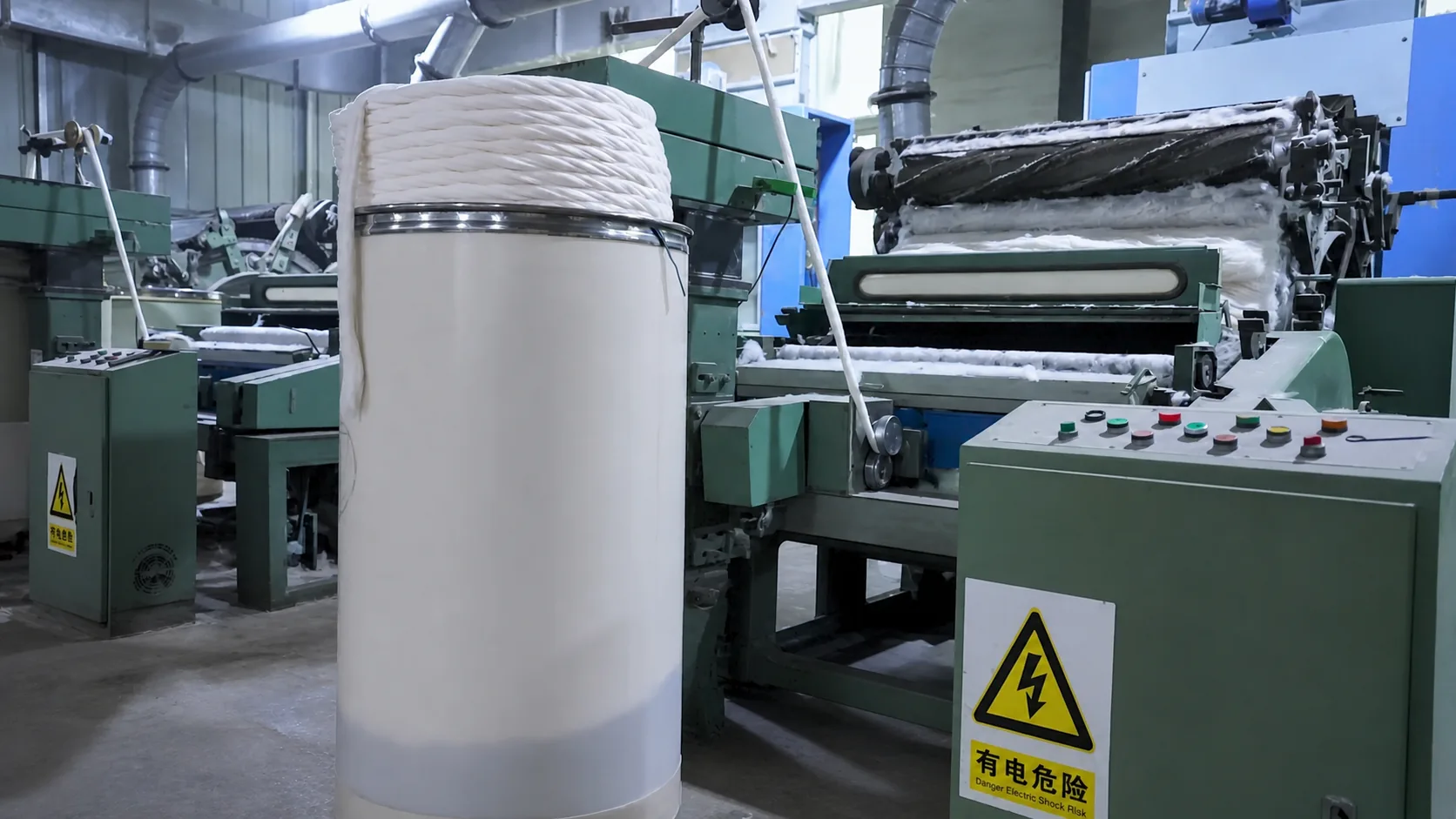
Material path 01 / Flat material
A flat, even cotton layer prepared as the material input for further converting.
Rolling / Cutting / Folding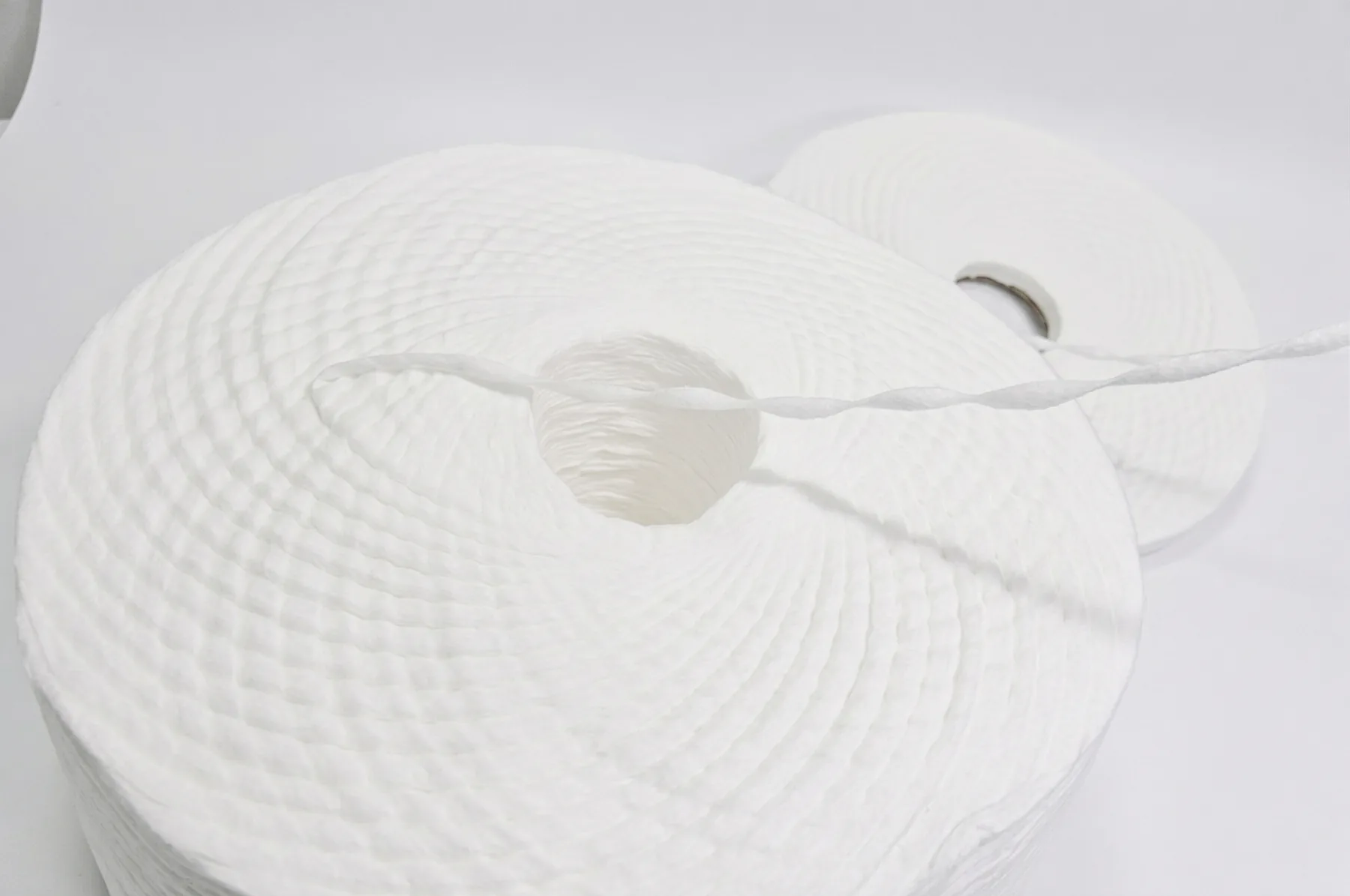
Material path 02 / Continuous material
A continuous cotton fiber form prepared for downstream product forming.
Portioning / Tip forming View Cotton Sliver →04 Product forming
Five finished-product paths
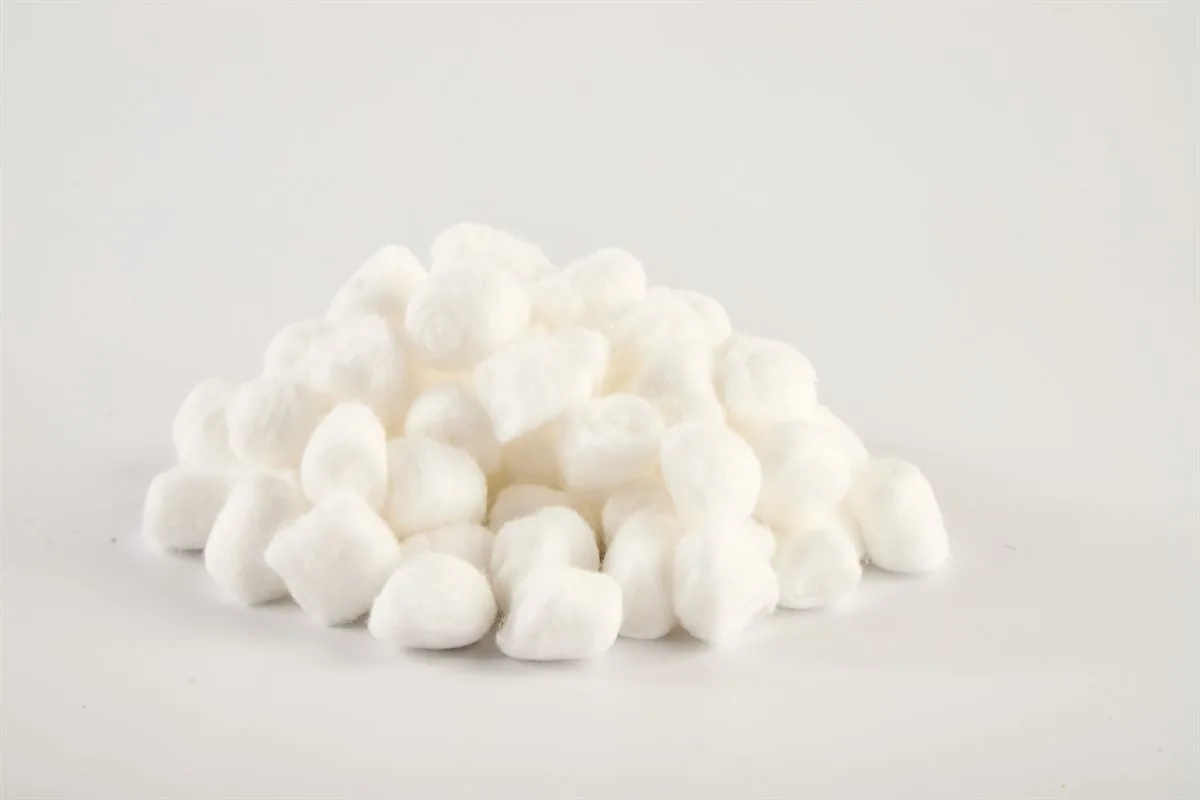
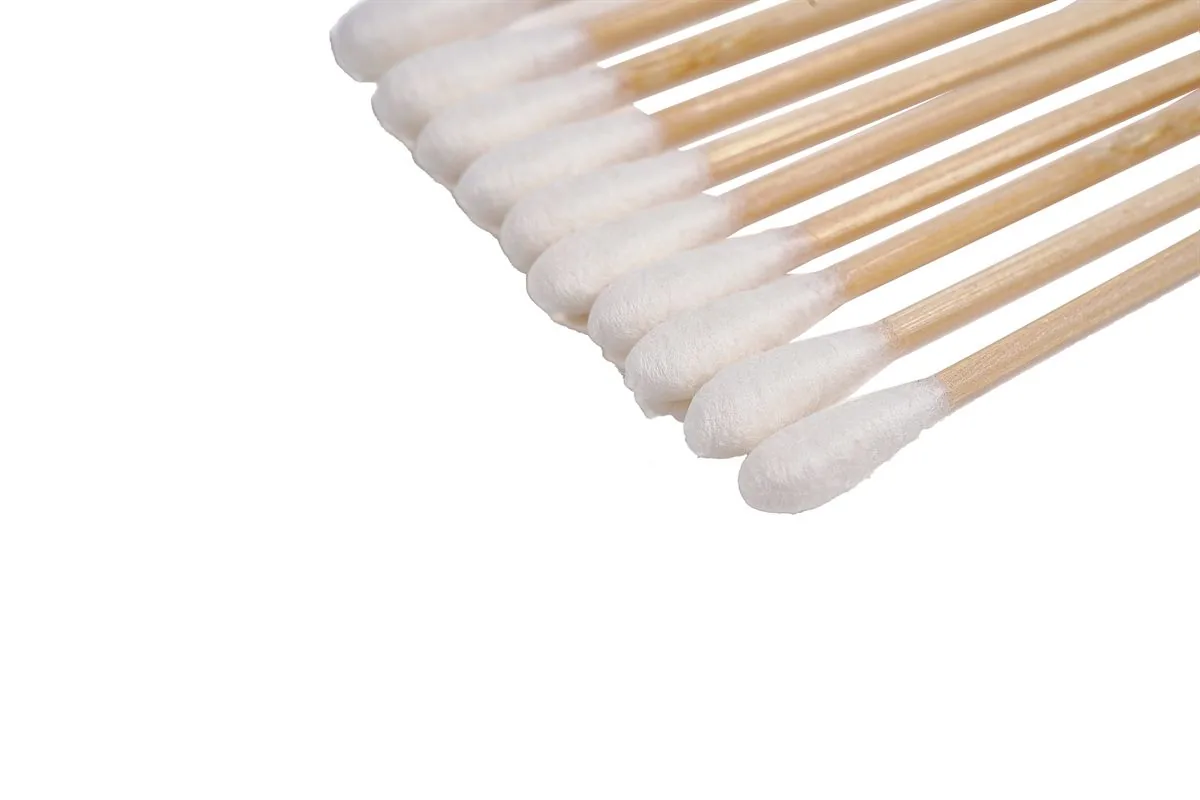
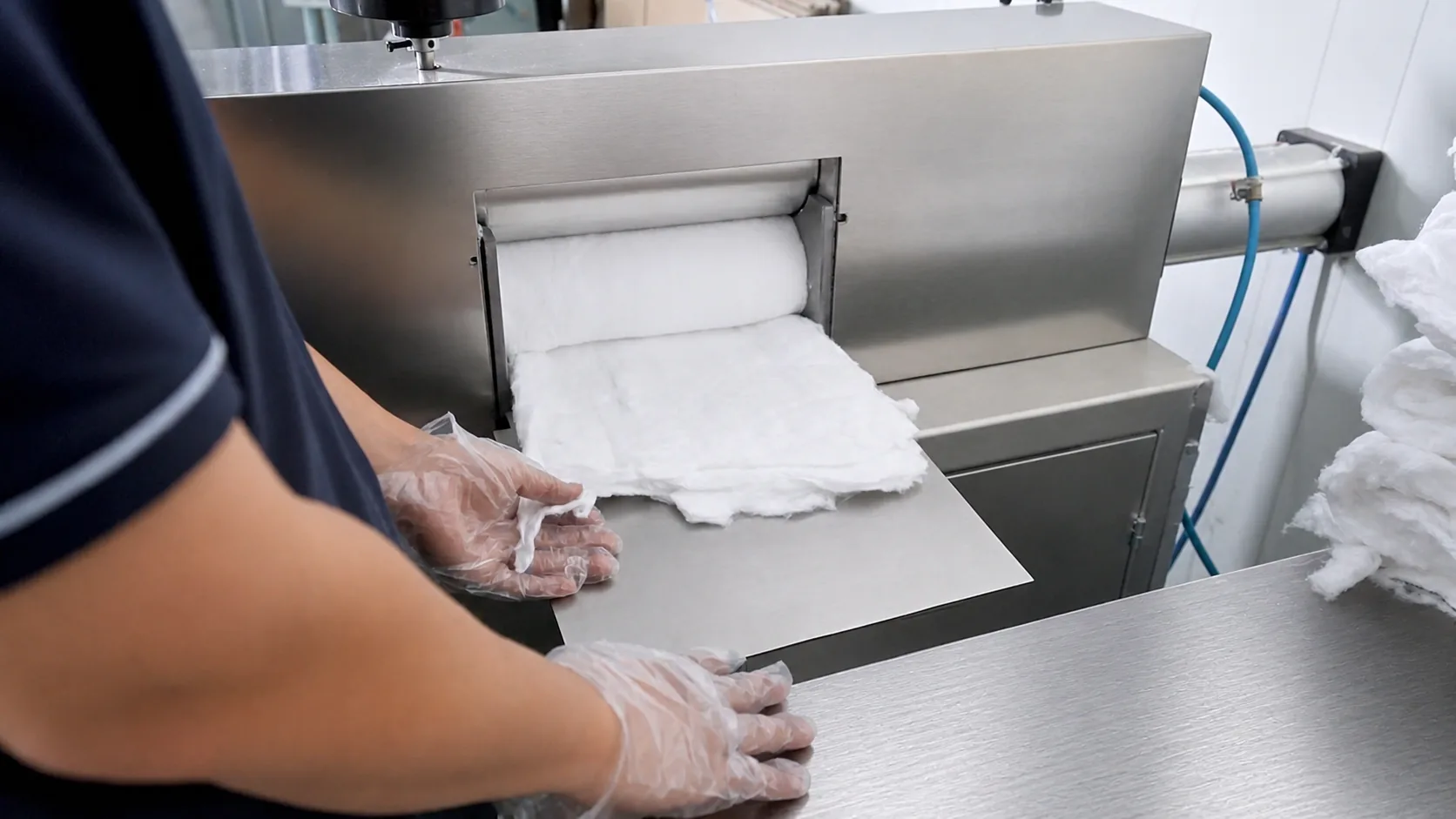
Cotton sliver is formed into cotton balls and cotton swabs. Carded cotton sheet is converted into absorbent cotton rolls, dental cotton rolls and folded cotton. The finished product determines which material path continues into production.
Material route 01
A flat cotton layer prepared for rolling, cutting and folding.
Finished formats
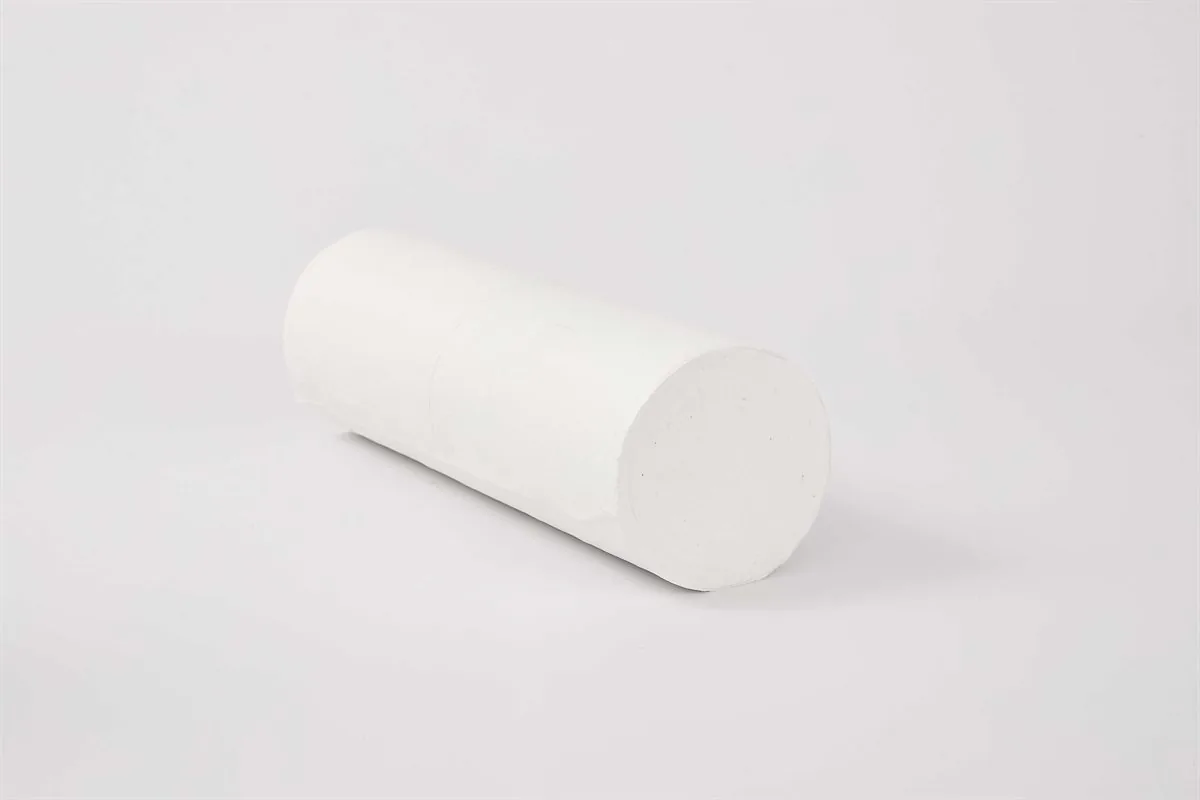
Carded cotton sheet is formed and rolled into the required finished format.
View product →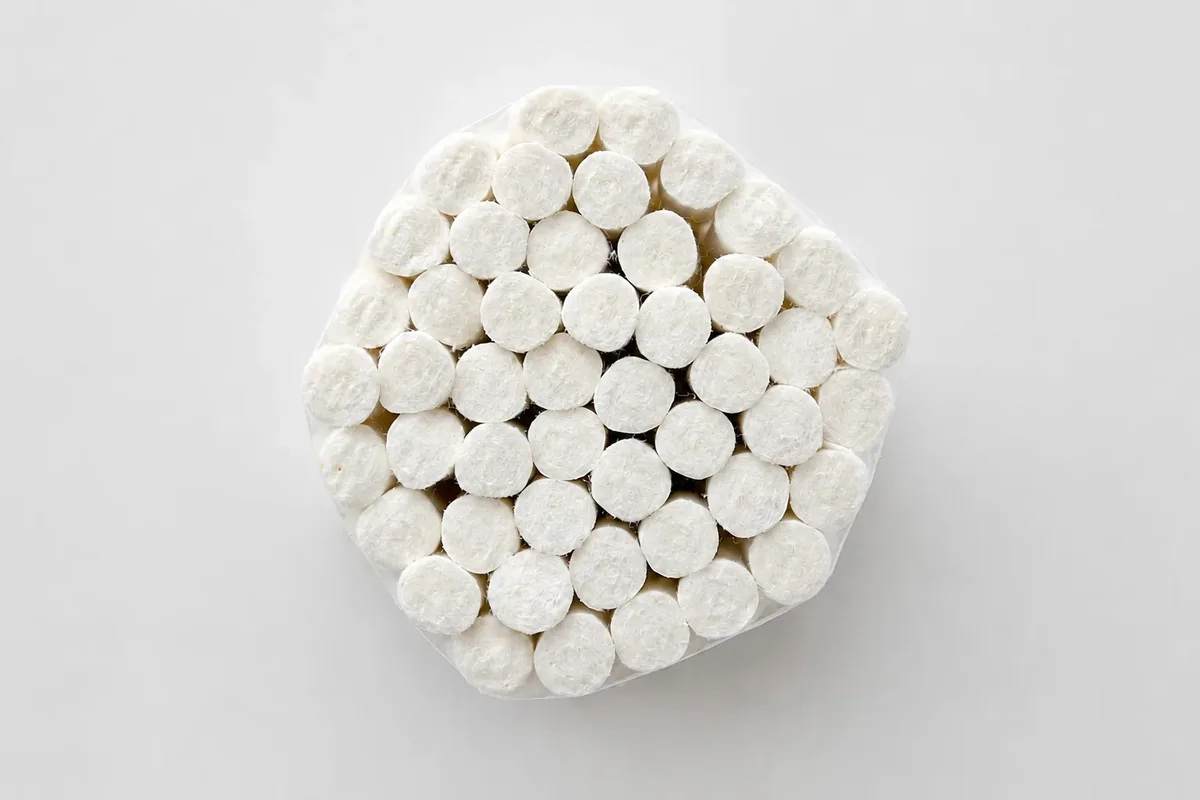
Carded cotton sheet is cut and formed into compact dental cotton rolls before packing.
View product →Finished product path 05
Carded cotton sheet can be cut and folded into a finished cotton format for packing.
Request product details →Material route 02
A continuous cotton form prepared for downstream forming equipment.
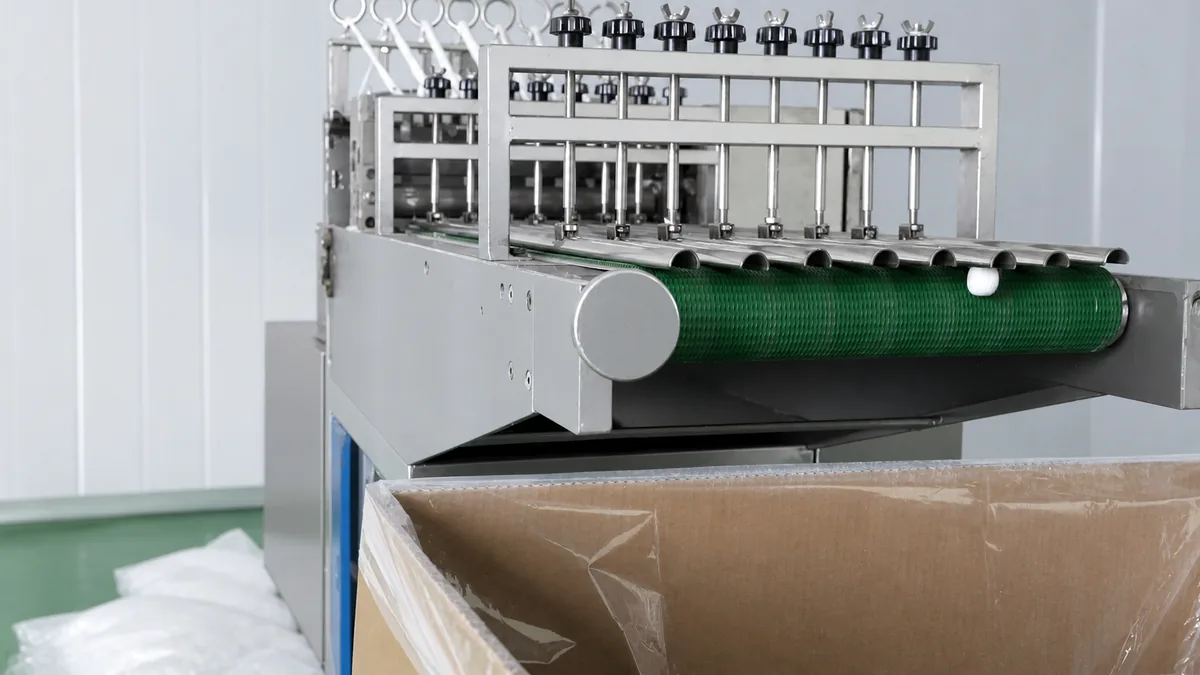
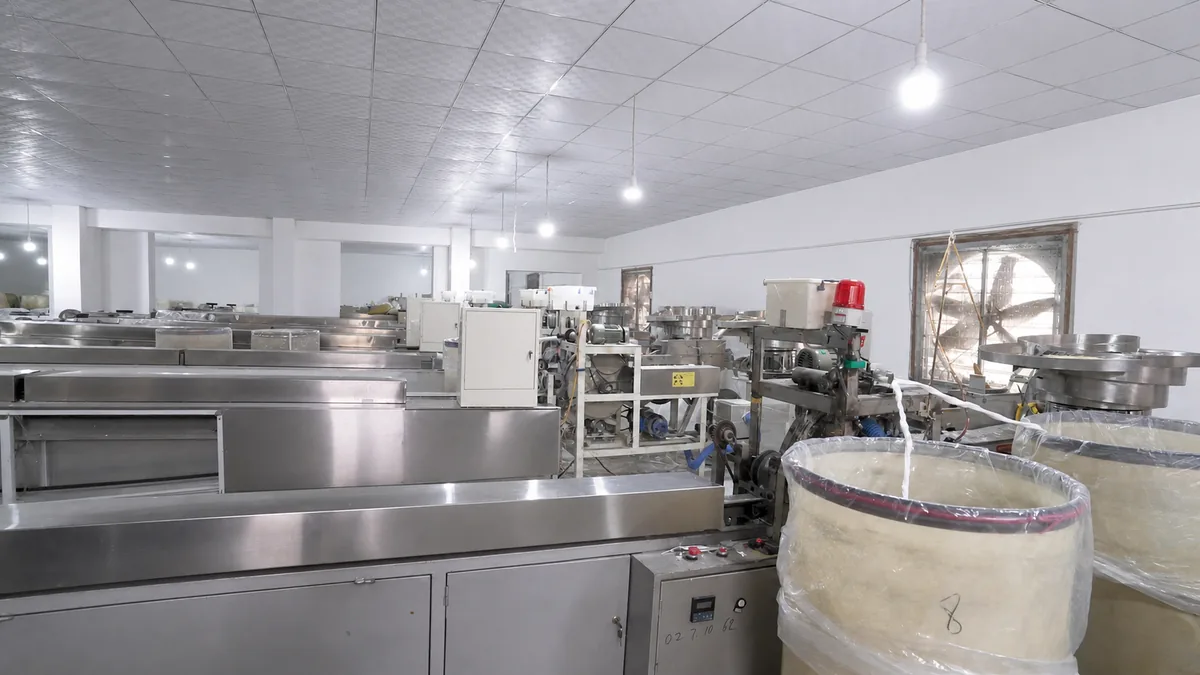
Finished formats
From material to finished format